Social Media Publicizes

During previous decades people only had each other to relay information, which means that only the people you knew had information about the topic. During the fight for African American rights whenever there was a sit in, you would know everyone there or at least know someone they knew. Social Media has changed this fact, but mainly in a good way. Social Media helps to get hard facts out almost instantly, and anyone can share and see the information that is broadcasted on the internet.

images

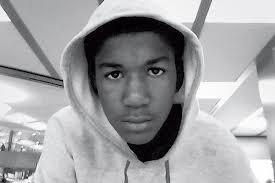
Without social media most Americans would never know the name Renisha McBride or at least I would not. I also would not know the name Trayvon Martin.


Without social media activist groups would not be able to create their own hashtags such as #NotYourAsianSidekick or #savethetigers.

UnknownGroups such as FORCE would not be able to design fake panties to support rape victims and show how wrong it is and claim that Victoria Secret themselves own them without social media.

Social media gets info ration out faster than any other resource. Mainly because all of the youth today use it. I do not have a single friend who does not at least have one social media account. I personally have over three myself.


Posted in Miscellaneous | Tagged , , , , , | Leave a comment

The Day the Feminist Blogosphere Imploded: A Links Roundup

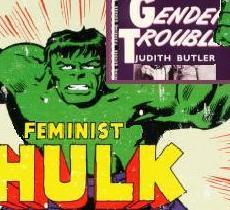
feminist_hulkMalcolm Gladwell’s piece on “Why the Revolution will not be Tweeted” makes me mad. There are a lot of issues, but the most troubling for me was his insistence that activist movements have to be hierarchically organized to be successful.  He drew an absolute distinction between weak tie/disorganized/low-risk/online activism and strong tie/hierarchical/high-risk/location-based activism.  A lot of things went through my head: Online activism is more inclusive!  It raises visibility and reaches people who can’t be where all the action is!  It gives many people the opportunity to contribute their ideas and experience to a movement!

And even beyond that, it’s not like online and location-based activism have to be mutually exclusive…look at our readings on #notyourasiansidekick and the “Consent is Sexy” campaign!  These two movements combined both forms of activism and reached a lot more people (in terms of both participants and audience) than they would have with location-based activism alone.  Online activism is awesome and powerful!  Non-hierarchical organization is a beautiful thing!  Huzzah!

But then the feminist blogosphere imploded on itself, and my entire worldview crumbled.

Continue reading

Posted in Links Roundup | Tagged , , , , , , | Leave a comment

Interview with Feminist Extraordinaire: Tanya Hoang

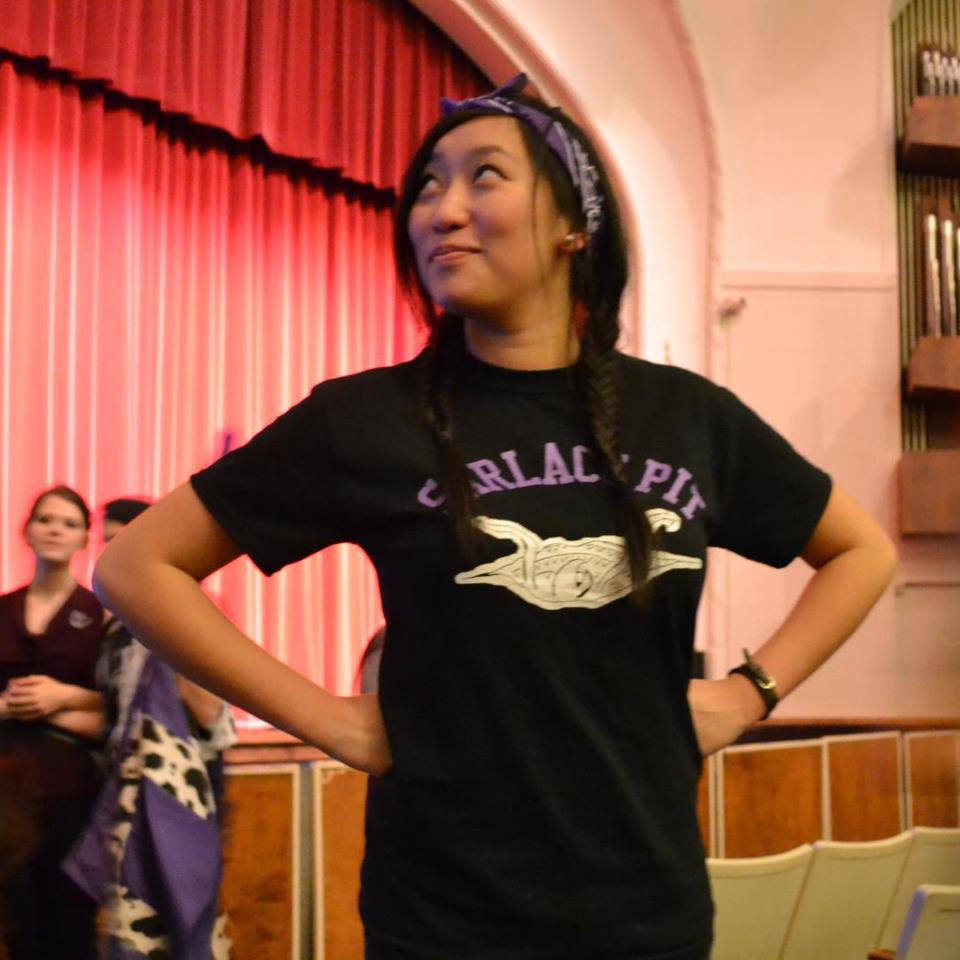
Tanya Hoang: Feminist Extraordinaire

Tanya Hoang: Feminist Extraordinaire

I chose to interview Tanya Hoang as she is both a self-identified feminist and an Asian American woman. I thought it would be pertinent to get her perspective on some of the issues we read about this week.

What are your thoughts on feminism?

I think feminism is a wonderful movement. I’m a big supporter of it and I encourage others to support the cause, because I believe anyone who supports human rights is, by my definition, a feminist. Continue reading

Posted in Discussion, Q & A | Tagged , , , , , , , | Leave a comment

Twitter, Feminism, and Political Activism

It’s too bad we had a snowpocalypse last week. I was looking forward to discussing Malcom Gladwell and the question of Twitter (or social media more broadly) and activism. It’s been a few years since that piece was published in The New Yorker, and when it came out many people took issue with Gladwell’s argument (see this post, this post, and this post for summaries of the backlash). There’s so much to say about what Gladwell writes, and it’s difficult for me to distill it to a brief list of points.

twitter_battle_a_l

I do appreciate Gladwell’s critique of people who conflate retweeting and liking on Facebook with the same kind of embodied resistance to injustice that happens all over the world on a regular basis. But I will say that I agree with Patrick Meier. The future of political resistance lies in people’s ability to mix and master digital activism with civil disobedience. No matter what Gladwell thinks, Twitter and other social media platforms have the capacity to spread information more quickly, compel people to care and take action, and form resistance to unjust regimes. Social media, and even Twitter, has changed since 2010, but what has not changed is the essential reality that people are increasingly directing their attention to social media platforms. And in the era of widespread Twitter participation, the terms of what constitutes political activism has evolved as well. Continue reading

Posted in Links Roundup | Tagged , , , , , , , , , , , , , , , | Leave a comment

The Blogosphere Awaits!

converse2The Snowpocalypse cancelled our week on Social Media and Political Activism, but we still need to get into those blogospheres!  The Blogosphere Creation might seem a little hard to put your finger on, but, well, that’s because blogospheres are multifaceted and sometimes disunified by their very nature.  On Week 6 we’ll all be loosely committing to a blogosphere to engage with for the rest of the semester, so now is the time to start investigating.  Here are some tips for finding a blogosphere niche:

  • Think about some social justice and/or activist causes that interest you or that you would like to learn about
  • If you’re not familiar with your topic, do some background research online (or if you really want to nerd out, search for your topic in Credo Reference or Oxford Reference Online). (I’m sorry, the librarianness is hard to suppress.  But for realz about the reference sources.  They are helpful).
  • With your background information in mind, start searching for blogs about your topic.  This can be as simple as searching in Google: “food sustainability blogs.”  Make sure you try searching with a variety of related terms (there’s the librarian again!).  When I tried “food justice blogs” I got results with a different political slant.  Start perusing blogs and getting an idea of current conversations.
  • Let the first blogs you find lead you into a web of other information–read linked blog articles, find the people writing the articles on Twitter.  You’ll start to develop a web of sources that are in conversation about your topic.
  • Depending on your topic, you might encounter more mainstream news sites as well.  For example, if you are looking at movements for healthcare access, people in the blogosphere might be referencing mainstream news and magazine articles.  It is ok to engage with these, but make sure you are focusing on the blogosphere.

Sometimes professors compare starting research on a scholarly topic to walking into the middle of a party that’s been going on for awhile.  A lot of conversation already took place before you got there, and it can feel a little overwhelming.  It’s similar with entering a blogosphere, but at these parties people are wearing Converse instead of cocktail dresses.  So have fun!

For now, you can try looking into a few different blogospheres to see what interests you, but you should have a basic idea of what you’ll be following by class on Week 6 (although you might end up narrowing it down as the semester goes on).

Remember for class this Wednesday–write a blog post about our Week 4 readings and come with some ideas about your Bizzarro Research “Paper.”

Posted in Announcements | Tagged , | Leave a comment

New Honors Event: Alabama Symphony Orchestra

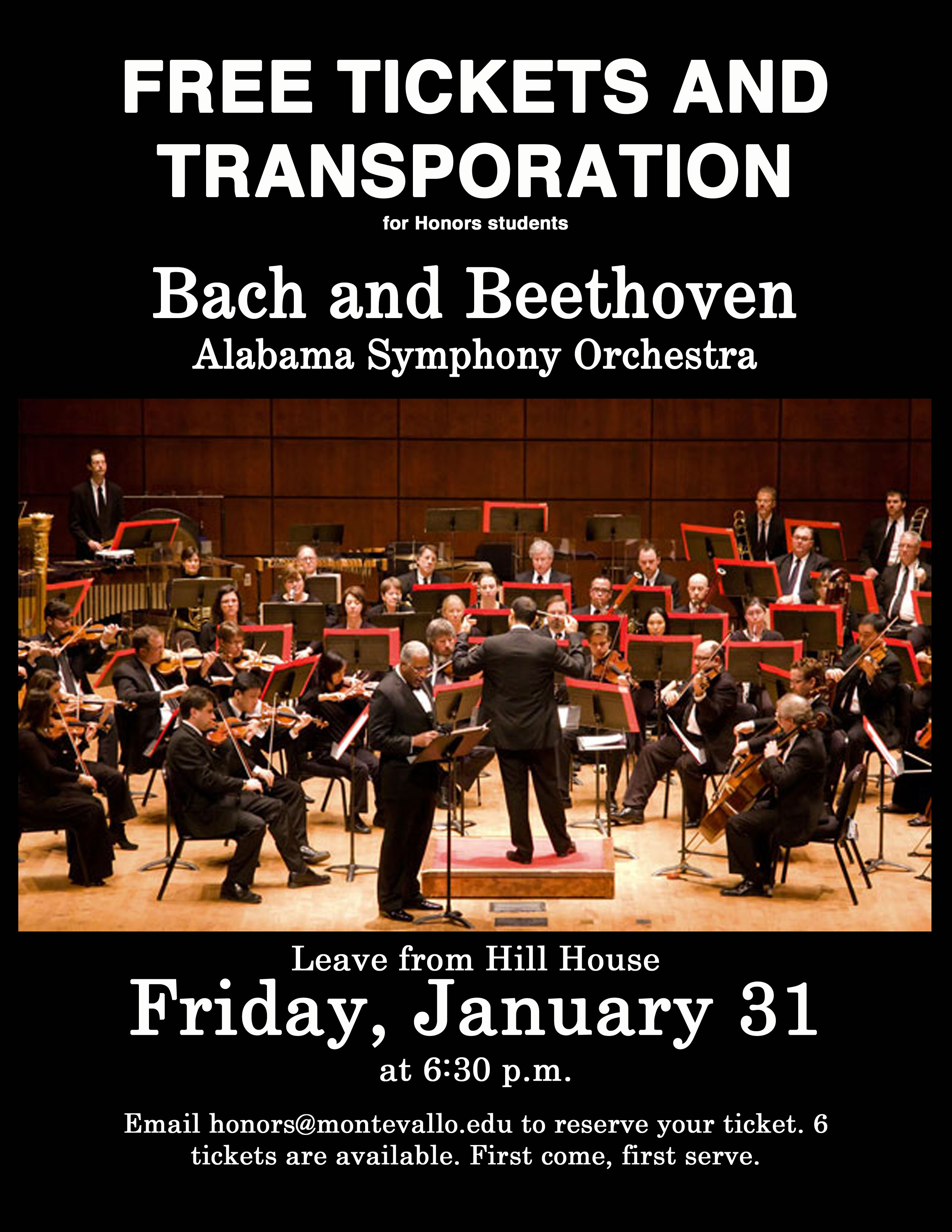
There’s another Honors Program event on the horizon. This Friday evening, join up in a trip to go see the Alabama Symphony Orchestra. Details are below.

Honors Flyer Symphony

Posted in Announcements | Tagged , , | Leave a comment

Interview with Dr. Matthews and Anonymous Student

Dalila_Mathews_www_thumb

I had the pleasure of interviewing Dr. Matthews, a chemistry professor at the University of Montevallo, about her views on information.

Kayla Pilkington: Why did you choose the textbook?

Dalila Matthews: The current text book was chosen because at the time of publication it was one of the only text books to do an “atoms first” approach to chemistry. The traditional textbooks up to that point started off talking about molecules and then breaking the molecules down into smaller units. The chemistry faculty felt that the atoms first approach would be better for the students.

KP: If you were to assign a research project, what type of places would up prefer you students looked for information? What types places would you prefer your students did not look?

DM: I would prefer students to look for books on the subject matter and look in peer reviewed scientific journals. I would caution students about using unverified sources of information. Most unverified information is obtained with the internet. That being said, I use the internet on a daily basis to look up information. It helps to already know a little about the subject matter so you can determine if the information on the website seems trustworthy. When using the internet, look in more than one place and compare the information. If you are getting conflicting information you know you need to dig a little deeper to get usable information.

KP: Have you ever heard of site like Jove? Do you consider sites such as this one a reliable source of information?

DM: I am not familiar with Jove but did take a look at the website. It is a very interesting idea but I would need to look deeper into their review process before I could be certain it is reliable. As before, I would most likely use it at first with subject matters I knew something about to gauge the reliability.

KP: Whenever you were in college, where did you find most of your information?

DM: In college I used mainly print library sources such as books and journal articles. I did use the internet but not as much information was available then as there is now.

KP: Where do you notice that most of your students find their information?

DM: Most students find information using a search engine like Google and websites like Wikipedia. Wikipedia is a good starting point for any project but I do not like my students to cite only Wikipedia. I prefer they go to the references and look up the primary source of the information.

I also interviewed one of Dr. Matthews students, Anonymous

Kayla Pilkington: Do you use your textbook on a regular basis?

Anonymous: I do not use the textbook except for homework problems. Which the teacher could copy and handout.

KP: Do you feel it was a waste of money to buy your textbook?

A: It was a huge waste of money.

KP:Whenever you need information , do you usually look more towards online resources or your book?

A: I look online for all of my information. I go straight to Google.

Posted in Discussion | Leave a comment

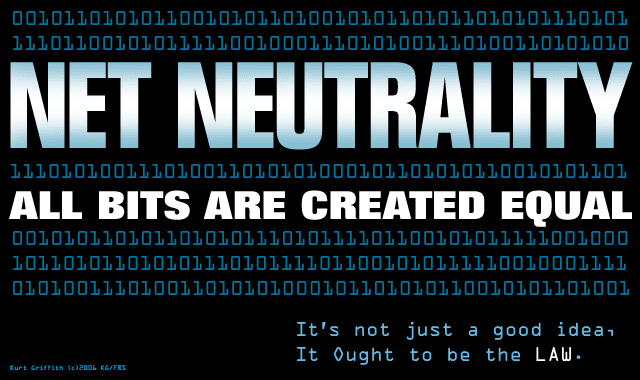
Net Neutrality No More?

All bits are created equal...or are they?

All bits are created equal…or are they?

On January 14, 2014, a federal court ruled against Federal Communications Commission regulations protecting net neutrality. You’re probably asking yourself two questions at this point: “What does that mean?” and “Why should I care?”

I’ll answer the second question first, to peak your interest: Netflix could be in jeopardy. More on this later. Continue reading

Posted in Current Events | Tagged , , , , | Leave a comment

Using the Master’s Tools

Audre Lorde said that the master’s tools could never dismantle the master’s house.  She was talking about feminist women working within the patriarchal structure of academia, but her words make sense in many contexts where information is created and/or knowledge is disseminated—online, in the book publishing business, on TV, in K-12 classrooms, and certainly in the ivory tower.  Can you ever radically change a flawed system when you’re part of it?

An excellent use of the master’s tools!

When I was waking up to feminism, or at least getting comfortable with calling myself a feminist, the texts that touched a nerve were poems by eighteenth and nineteenth century women poets, commonly called “poetesses.”  Their poems were about friendship, children’s deaths, the beauty of nature…but they were simultaneously about constructing empowered female communities, envisioning writing as a vocation (at a time when most vocations were closed to women), imagining a place for women outside the domestic sphere, even about embracing female sexuality.  They apologized for their writing a lot, but you could tell they weren’t that sorry.

These women spoke to me because they so artfully resisted the patriarchal structure while writing and living within it.  Subversion.  I learned this word from them, and it is one of my favorites.  It was a word I had been missing to define so much of my experience. Continue reading

Posted in Wild Card | Tagged , , , , , , , , | 2 Comments

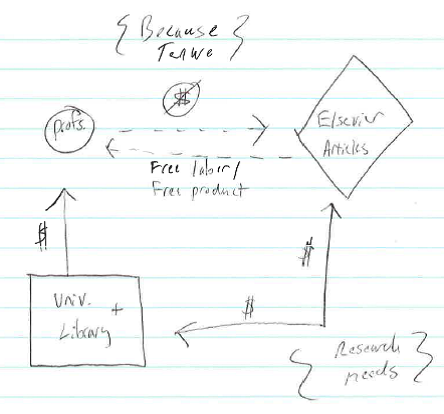
Universities Pay Twice for Information

because tenure

The economics of scholarly publishing

This week we’re talking about a series of issues related to the cycle of information in the academy. They all involve the cost of producing and consuming information that is deemed to be “scholarly.” Many of us are newcomers to the table in higher education, and we need to see how the demands of publishing and accessing information affect all of us. Even if we aren’t currently tying to publish articles in academic journals, the economics of scholarly publishing directly influences our education.

I’ll never forget my early days in graduate library science classes, in which I realized for the first time that universities pay (at least) twice for their scholarly information. I was in a collection development class at SUNY Buffalo, where I saw a guest lecturer angrily scratching a series of arrows and circles onto a chalkboard. He explained that library budgets were increasingly being allocated to proprietary database companies at the expense of libraries and librarians. Money that used to be spent on books, furniture, technology, and other things libraries need now goes to major companies like Elsevier, which make millions of dollars each year by selling content back to universities at an exorbitant price. Continue reading

Posted in Discussion | Tagged , , , , , , , | 5 Comments