All Good Things Come to an End

As I near the end of my time in the class, Politics of Information, I have a new appreciation for the people who take valuable time out of there daily life to edit wikipedias, write blogs, write buzz feed articles, and daily fight for their beliefs. Always remember to have fun and enjoy life. I´ll be out there somewhere riding my e-scooter thinking about the good times I´ve had doing this.

Wikipedia

Chi_omega_crest
Editing my Wikipedia was probably one of the hardest things that I have ever had to do. When editing a Wikipedia, I constantly had to check myself and make sure that I was not being biased in a negative or positive fashion. When I finally picked the subject I wanted to write on it was because I had a lot of knowledge on the subject. One discouraging part of our discussion about Wikipedia was the number of women that contributed to the articles. I hope in the future to see that number increase.

Blogs

Writing the blogs was one of my favorite parts of the class. Writing blogs is a way to get your ideas and thoughts out in the world. My favorite blog was the Q&A because it gave my an insight into my teachers decision for choosing the book that she chose. Another part of the class that dealt with blogs was my blogosphere. For my blogosphere I chose to follow Jill Stanek . This blog revealed a lot of valuable information to me and it taught me things that I never knew. My blogosphere subject was abortion and by viewing Kasey Jackson  , it allowed me to strengthen and change my believes in some areas.

BuzzFeed

enhanced-4416-1397052733-13I read articles on BuzzFeed all the time and do fun quizzes, but I never knew how much work went into a BuzzFeed article. In order to create my BuzzFeed I had to research and compile from a lot of other sources. After completing this project I had a new found respect for author of BuzzFeeds. I also ran into a few problems mainly with the thumbnail. This problem made me realize how something so little could effect your entire article as a whole.

Spread a Message 

For my Spread a Message I decided to post my Bizzarro Research Paper on twitter and Facebook. I also decided to put up two different flyers in the cafe and residential halls: Child Abuse poster and Child Abuse Poster 2.

Posted in Discussion | Leave a comment

Income Inequality: What Can You Do?

Spreading the Message!

Spreading the Message!

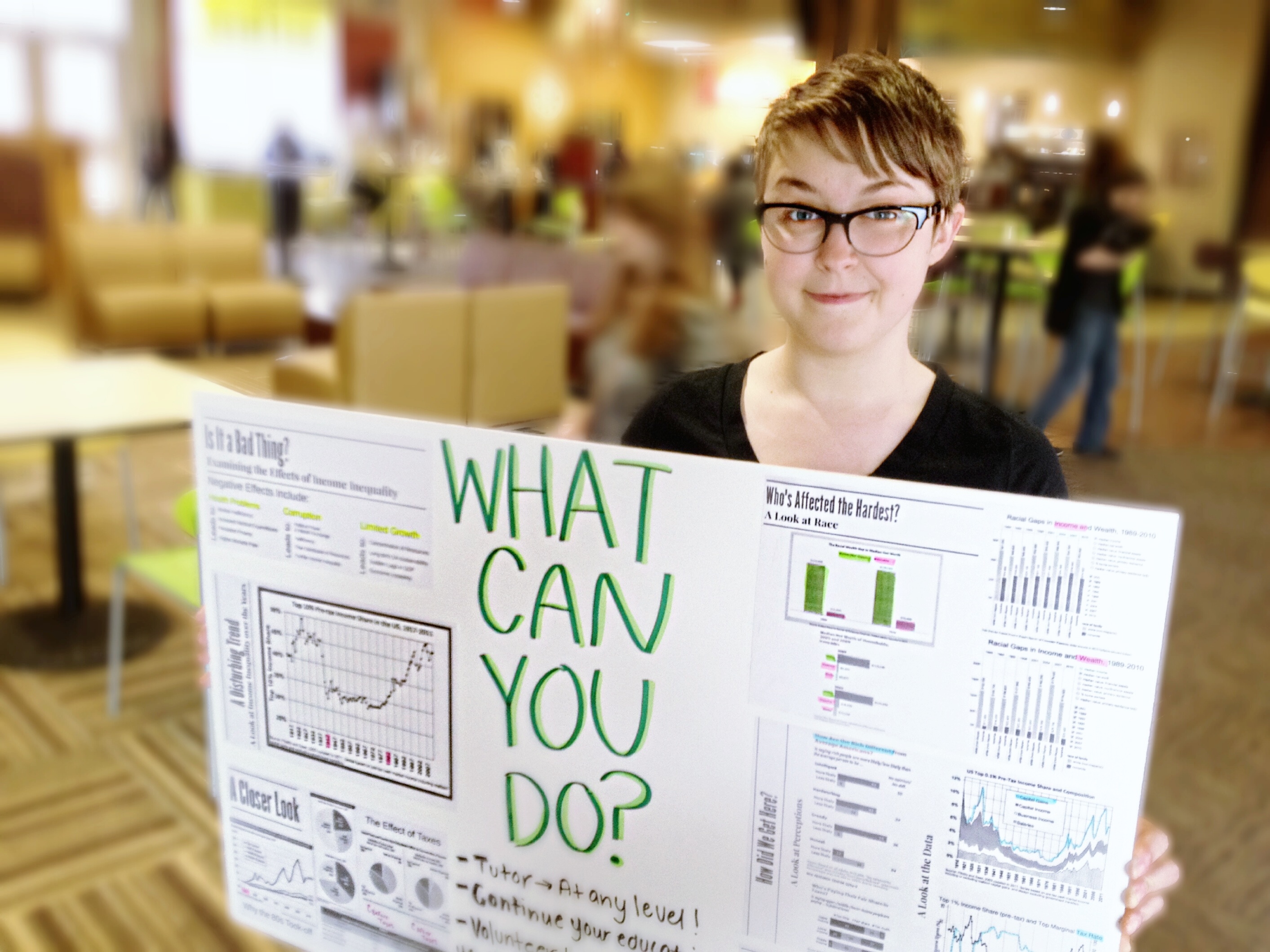
For my spread a message, I decided to take my Prezi offline and transform it into a poster so that I could more easily talk about wealth inequality here on campus. I decided that the best place to try to reach out to students is the Student Life Center, because unlike the cafeteria, students usually come to Farmer to hang out and relax—not just gobble down some food and go! Specifically, I chose to target our student body because college students, as future civil leaders, educators, business men and women, etc., we have great potential to change the lives of the communities we enter as adults. Continue reading

Posted in Creation Submissions, Discussion, Wild Card | Tagged , , , | Leave a comment

How do I spread the message of the digital divide?

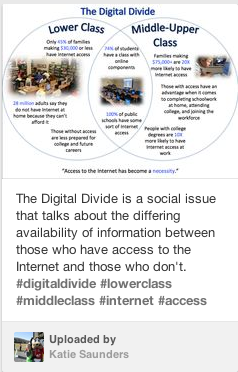
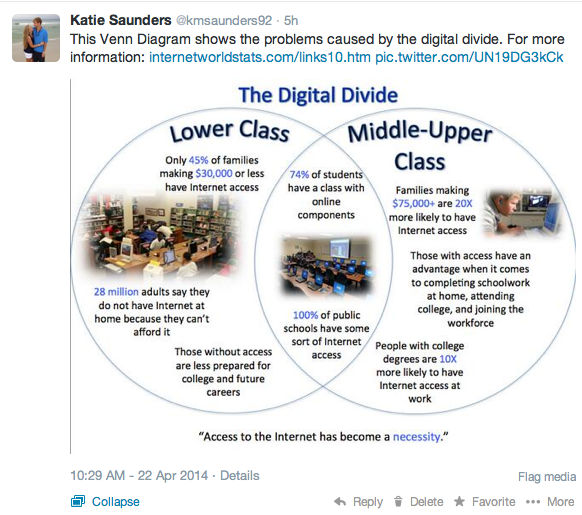
The week we talked about the digital divide, something hit close to home. I attended Hoover High School (along with my younger brother and sister) and my mom works there. A few years ago they bought iPads for every student that connects to WiFi. The idea behind this was that they can now have their textbooks on the tablet and complete their work on there as well. Because of the accessibility, teachers have begun making homework due at night as well. This becomes a problem for students who don’t have access to WiFi at home. So for my Bizzarro Research “Paper” I created a Venn Diagram that illustrates many issues concerning the digital divide. While technology is a good thing, it also puts those without access to it at a MAJOR disadvantage when it comes to education, careers, and even day-to-day activities. So on to the next challenge…how do I spread the message and increase awareness of the digital divide? My first thought of course was to post it on all of the social media platforms, which I did. But then I thought, how am I going to reach the people who are affected by the digital divide and won’t see my social media pages? They need to be reached too. To solve this problem, I took the message back to where it started for me: Hoover High School. I have printed my Venn Diagram and will be setting the flyers out in my mom’s classroom to raise awareness of the divide in the place where I first noticed it.

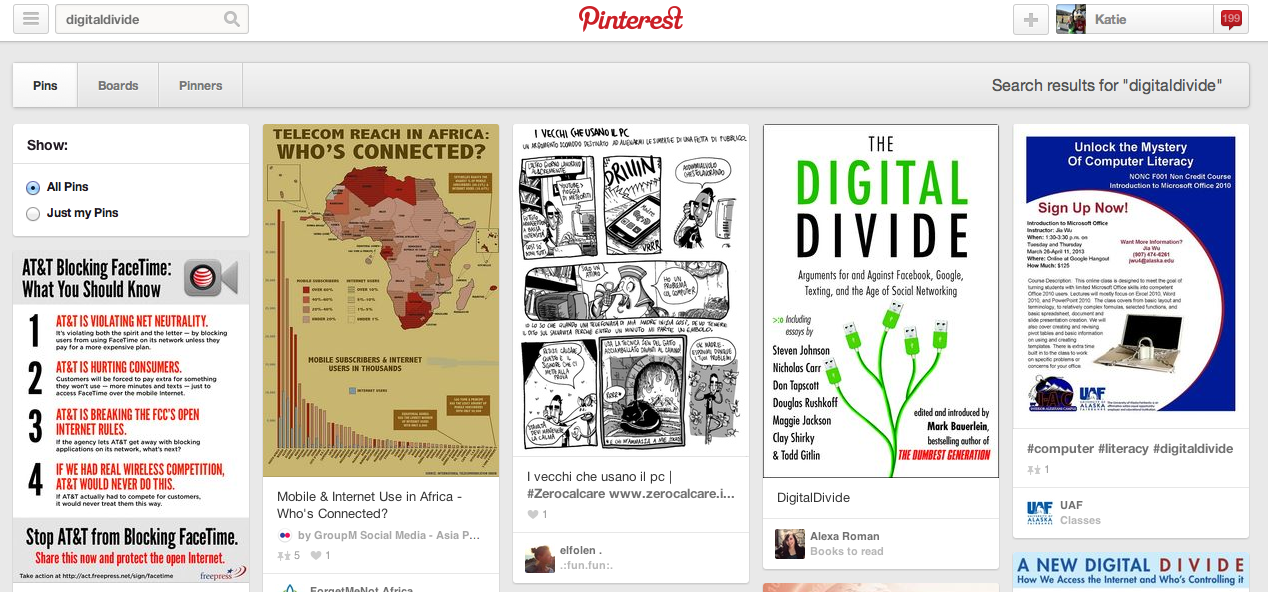
This is my pin on Pinterest. poi4

My hashtag #digitaldivide linked it to all this –> poi3 and made it searchable for those interested in the subject. My tweet also sent the message to all my followers and gave them a source for more information. poi5

Posted in Creation Submissions | Tagged , , , , , | Leave a comment

30 Rock: A Review

It’s no surprise that I think 30 Rock is a culturally significant television show, and one of my favorites of all time. Not only is it downright hilarious, but it also confronts issues like racism and sexism through comedy. Shows like 30 Rock make these societal issues more accessible to the general public. Popular culture is a way to make people care about what’s going on in the world. If you want to understand South Park and SNL every week, you’re going to have to know a little about what’s going on in the news. (Like the video below)

Continue reading

Posted in Reflection | Tagged , , , , | Leave a comment

The End: Final Reflection

Like Hannah, I had a difficult time deciding what exactly to write about in my final reflection blog. We have covered so many topics in class that have truly changed how I think about something that I once thought was so simple: information. I had never realized how information and the dissemination of it was such a large social issue. I now understand how privileged I am to have the ability to access information, (I will speak more on this later in my spread the message) which led to my enhanced interest in the digital divide. I also see how there is still much that needs to be done in order for information to be equally accessed by everyone.

poi

I have also learned how to use SO many different tools that I never thought I would be able to! When scrolling through my Facebook news feed, BuzzFeed articles such as this are always what draw my attention, so of course making one of my own was one of my favorite projects.With that being said, I think going through the process of editing a Wikipedia article and seeing all of the work that goes into it, helped increase the credibility of the information on this site for me. With the help of the projects this semester, it has become clear that information can come in many different (and valuable) shapes and forms that allow it to reach different audiences.

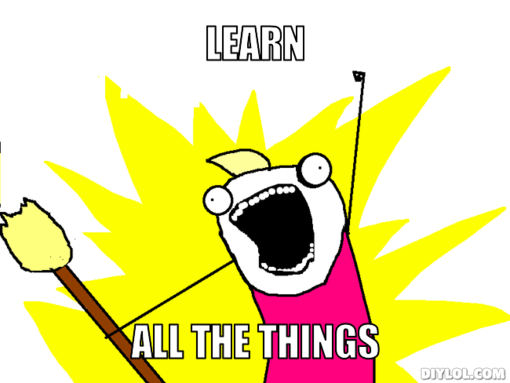
As for my blogosphere…man was I clueless when we got started. Once I finally understood what a blogosphere actually was, trying to find information was crazy overwhelming. There was SO much to look at! This was me….

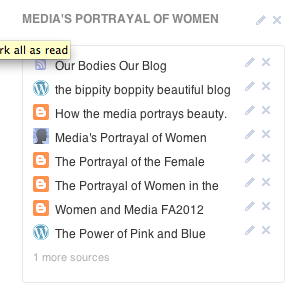
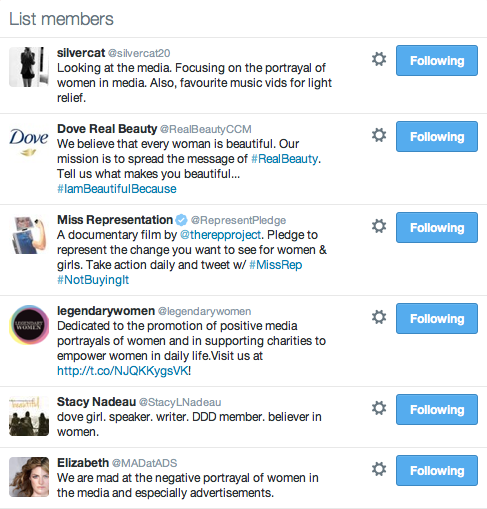
poi2 …every time I tried to make sense of it all. But once I was introduced to tools such as Feedly and Twitter Lists (who knew you could make lists on Twitter?!) it was much easier for me to sift through information. I also realized that I could use my favorite site of ALL times to follow people that would allow me to organize memes, articles, videos, info-graphics, and more relating to my blogosphere topic: portrayal of women in the media.

feedly     twitter list It all started when I went to listen to Stacy Nadeau speak about her experience with the Dove Real Beauty Campaign and followed her on Twitter later that night. Not long after, the incident with Target and the #photoshopfail came about. Social media and the blogosphere were buzzing about the negative portrayal of women in the media and once I got all of my information organized…I was hooked.

All in all, I have really enjoyed the class. Though some assignments have been challenging, it has broadened my knowledge about social media, the Internet, and many other topics, but most of all the importance of freely shared information.

P.S. I have actually started a blog for recipes! (but I’m not that far along so you can’t see it)

THE END

Posted in Reflection | Tagged , , , , , , , , | Leave a comment

Peace Out

When I was thinking about my final reflection blog, I found myself looking back through the syllabus and class blog to refresh myself about what all we covered in class. What struck me was that, for the most part, we talked about everything all semester. Topics from different weeks were always revisited, which I think is a sign of a good class. I was pretty intimidated by the class blog at first, but it turns out that blogging is really fun! I might even start my own blog about living in France next year (even though I have always sworn that I would never become one of those study abroad bloggers).

Thanks, Ryan

Thanks, Ryan

Writing for BuzzFeed was one of my favorite projects of the semester. BuzzFeed is entertaining and accessible, and I think it could be a good way to get important information and news out to people. Condensing things into short lists and including popular memes is great for frivolous information, but it can also work for more serious matters. For example, this article tries to make North Carolina voters more informed, and another explains the Syrian Civil War by using clips from The Hills. By putting important information into a familiar format, BuzzFeed could disseminate more valuable information than “19 Celebrities That Look Like Lamp Shades.” Continue reading

Posted in Creation Submissions, Reflection | Tagged , | 1 Comment

Final Reflection

More like J-Scam

More like J-Scam

Throughout the course, I have been exposed to all sorts of new and interesting social challenges which never before occurred to me. For example, I had no idea what a scam corporations like JSTOR are or how they operate. For those of you who may read this blog and think “What is she talking about?” —I’m referring to the process wherein college professors and other members of the academic field write journals, publish them, and then they and their institutions have to pay to access them! Another interesting issue is how those who are unfamiliar with technology and/or those who can’t afford internet miss out on many opportunities (like the ability to apply for a job online), as well as access to resources like news and other information. I’m grateful that I took this class and can now inform others about these issues, as well as take in new perspectives when trying to tackle social problems. Continue reading

Posted in Discussion, Reflection | Tagged , , , , , , , | 1 Comment

Wikipedia, Democracy, Power, Freedom, and the Death Rattle of Academe

wikipediaI think Wikipedia can be a reliable source.  There, I said it.  Take me away to librarian jail!

We’ve talked on and off this semester about the ideas of authorship and credibility, as well as the levels of value we assign to print vs. online sources.  When it comes to “real” or “serious” research, the credibility buck seems to stop with the author: can you tell who it is, and what his or her credentials are?  And when it comes to finding information, even though we might find more of our information online, we still assign higher value to print sources.  Even though our information seeking behaviors look a certain way because of the proliferation of online resources, there’s a lot of stuckedness in days of yore in terms of how we value and use information.

These are all a lot of generalizations, so let me put some of this in perspective.  When I teach English 101 and 102 library classes, one of the skills students need to practice is finding background information about whatever topic they’re researching.  I present them with a few different resources to go about finding background info: obvs Wikipedia, but also Credo Reference, Oxford Reference, and sometimes Opposing Viewpoints.  These last three are library databases, and Credo and Oxford are specifically collections of digital reference books.  When I talk about these resources, I often explain them as :”like Wikipedia but you know the information is credible.”  I kind of cringe a little when I say this, and occasionally I go on a rant about how all authors have bias, no matter what their credentials and even if they are writing in a supposedly unbiased form, like a reference entry.

The thing is, there’s so much more available in Wikipedia than there is in Oxford or Credo or Opposing Viewpoints.  The authors of Wikipedia articles might not have PhDs in their field, but often they have some kind of vested interest, maybe based on personal experience, like Kayla and Katie mentioned in their posts.  Or maybe they have a specialized understanding of a useful way to organize information, like Rachel explained.  There is so much power in a medium that welcomes many voices.  Why don’t we think that information is more credible when multiple people have created it, rather than one all-powerful person with a certain degree behind his name?

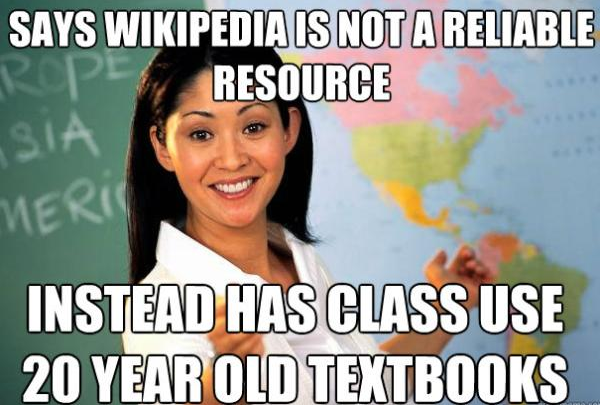
The other troubling thing that I often say in English 101 and 102 is that “Wikipedia is a resource, not a source.”  Meaning, you can use it to get an overview, build a list of vocabulary related to a topic, maybe even find some articles worthy of citing in the references section, but you can’t actually cite the Wikipedia article.  The students are already programmed not to cite Wikipedia; some of them act like it’s a sin to even look at a Wikipedia page.  So why this invisibility of Wikipedia?  We’re all using it.  I use it everyday.  I used it before our class last week to remind myself of theorists who had written on the idea of authorship.  Those English 101 and 102 students might be finding print resources using the ideas and maybe even the actual citations they’ve gotten from Wikipedia articles, but the Wikipedia articles themselves are a blank, an unmentionable part of the research process.

Academia is good at upholding the status quo.  It’s especially committed to traditional ideas of publication.  In the humanities, most publishers can barely wrap their minds around the idea of a co-authored article or book.  And in the sciences and social sciences, usually one researcher is designated the “lead author.”  So much hierarchy.  So much bullshit.  Academic publications don’t make money, and yet e-books publications are suspect (even though they don’t need to be printed and bound, which would save a lot of the money that isn’t being made).  This all goes back to Week 3, when we talked about students and professors and the cycle of power in academia.  Professors ask their student to replicate power structures when they render Wikipedia invisible.  How long is it going to be until we revise our idea of what good, credible, citable, information is?

Postscript 

As usual, I don’t have any solid conclusions, but I do want to post a link to the Wikipedia article on feminist pedagogy, which I contributed to last semester.  I did an online professional development course about feminist pedagogy for library instruction, and our final assignment was to work in a group to edit a part of the feminist pedagogy Wikipedia article.  I have to admit that until then, I had no idea how difficult it actually is to edit a Wikipedia article (Hannah gave a great description of this process in her post).  I love Wikipedia for its accessibility, but it still excludes people as editors and as readers.


Posted in Discussion | Leave a comment

My Wikipedia Edit

Chi_omega_crest

I chose to edit the Chi Omega Wikipedia page. Editing a Wikipedia page is a difficult task because multiple pages are locked, and the editors do a great job of taking down all biases. If a site is biases however they put a warning at the top of the page telling the viewers of the biases. I chose the topic of Chi Omega because that is something I am very familiar with, but even this was a difficult task because most of the information was correct. However I chose to correct two things the number of collegiate and alumnae chapters and add one person to the list of notable Chi Omega alumnus.

Posted in Wild Card | Leave a comment