
It’s too bad we had a snowpocalypse last week. I was looking forward to discussing Malcom Gladwell and the question of Twitter (or social media more broadly) and activism. It’s been a few years since that piece was published in The New Yorker, and when it came out many people took issue with Gladwell’s argument (see this post, this post, and this post for summaries of the backlash). There’s so much to say about what Gladwell writes, and it’s difficult for me to distill it to a brief list of points.
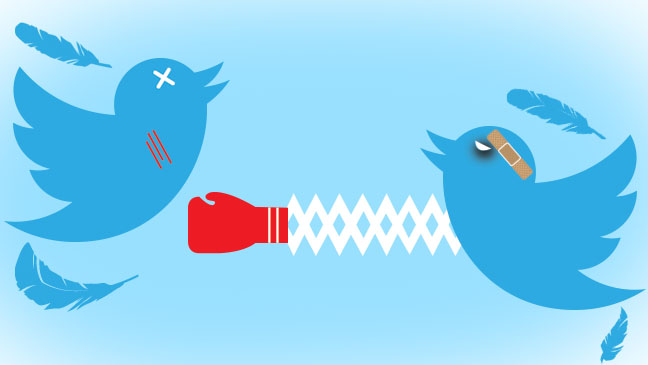
I do appreciate Gladwell’s critique of people who conflate retweeting and liking on Facebook with the same kind of embodied resistance to injustice that happens all over the world on a regular basis. But I will say that I agree with Patrick Meier. The future of political resistance lies in people’s ability to mix and master digital activism with civil disobedience. No matter what Gladwell thinks, Twitter and other social media platforms have the capacity to spread information more quickly, compel people to care and take action, and form resistance to unjust regimes. Social media, and even Twitter, has changed since 2010, but what has not changed is the essential reality that people are increasingly directing their attention to social media platforms. And in the era of widespread Twitter participation, the terms of what constitutes political activism has evolved as well.
To that end, my links roundup is a consideration of Gladwell, Tara Conley, and our other readings. Any my roundup is of a recent debate about feminism’s toxic Twitter wars. The entire question of feminism airing its disagreements out on Twitter was the subject of Michelle Goldberg’s recent article in The Nation. Goldberg suggests that the fear of stepping into an ideological landmine when one writes about gender and sexuality rights online is crippling and damaging to the broader goals of feminism, even if this has always been happening in feminist activism communities. Other people have weighed in as well. Jessica Grose from Slate recaps the questions Goldberg’s article raises and makes an important distinction between activism and writing. Is any kind of writing about issues that concern “feminist issues” automatically activism? What is the line between writing and activism on social media networks?
The examples in Grose’s article take me back to one of the instances I often use to counter Malcom Gladwell’s argument that social media cannot foster significant change. The Susan G. Komen Foundation’s decision to cut funding to Planned Parenthood elicited such a significant backlash on social media that the foundation reversed its decision and restored the grant funding. The collective response of people voicing their disapproval on Facebook, Twitter, Reddit, and other social media circles shattered Komen’s reputation and resulted in a real, tangible change that improves the lives and health of many women. So, in this instance, it seems that when people updated their Facebook statuses to voice their disgust at the Susan G. Komen foundation, they weren’t just making an ideological stance about how much they value women’s health and reproductive rights. They were participating in an activist tide that influenced change.
Tara Conley makes a similar argument in her blog post about the shooting of Renisha McBride. A groundswell of posts on Twitter, Facebook, Instagram, and other networks forced what would be an under-reported murder in Detroit into the national news, which then compelled the prosecution handling McBride’s case to pursue more aggressive punishment for her killer, Theodore Wafer.
Examples like this can be multiplied, and links roundups are the perfect genre to do that (see here, here, here, and all the campaigns on Change.org). The questions for our purposes are, what constitutes activism on social media networks? And do we as students have a responsibility to use social media to be politically active?