

Mallory Mitchell, a senior marketing student at the University of Montevallo, has done undergraduate research related to our topic at hand: activism and social media. As a part of the McNair Scholars Program, Mallory worked with Dr. Michele Bunn to analyze Social Media’s Influence on the Motivations of College Students to Volunteer. The full paper is published online in Unconventional Wisdom: University of Montevallo McNair Scholars Program 2013 Research Journal.
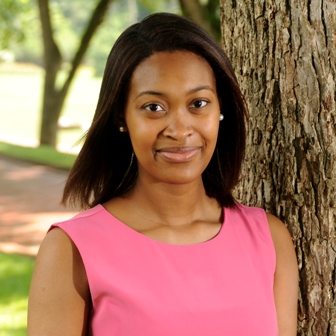
UM Senior, Mallory Mitchell
Will you briefly summarize your research on the connection between social media and motivation to volunteer?
We found that those students who volunteered at a high or moderate level also used social media at the same level. They were more likely to use Facebook and LinkedIn to engage with others, especially nonprofit organizations.
How can we use social media more effectively to recruit volunteers?
The first step is to use the networks volunteers most frequently use—my study found those were Facebook, Twitter, and LinkedIn. After that, communicating with volunteers by tweeting at them or encouraging their shares, likes, or comments on Facebook makes them more likely to view the organization in a positive light and remain engaged enough to recommend it to friends.
Bottom line: does social media make a difference?
Social media has the capacity to make a difference if used effectively. It definitely requires a strategy for not only the initial contact with others but also maintains the relationship and encouraging them to bring others into the communication. It has the possibility of reaching a lot of people, and a good website using trCREATIVE for example could boost their traffic and get even more exposure and thus more volunteers. Social media really lends itself to advocacy and grassroots efforts specifically.
In an article published in the New Yorker in 2010, Malcolm Gladwell compares today’s world of social media activism to activism of the past, like during the Civil Rights Movement. Basically, he claims that in the past, participants were more committed when they had a “strong-tie” or personal connection to the movement (i.e. their friends were also involved). On the other hand, Gladwell says that activism linked to social media results in “weak-ties.” He concludes that strong ties lead to more “high-risk” activism than weak ties. What do you think about this?
The literature on volunteerism does suppose that a personal connection does lead to a higher level of commitment because it is filling an emotional need or desire. I believe advocacy solely through social media does not have the foundation to last for very long, but I think social media coupled with more traditional forms of advocacy has the ability to spread the message faster and to a wider audience.
Gladwell also compares the hierarchical structure of the Civil Rights Movement to the networks of social media. He claims that hierarchies are more effective, and that it’s harder to get things done in the world of social media activism because there is no clear leader and anyone can contribute. Do you agree with these ideas?
I agree depending on the objective. If the point is simply to spread your message, then social media can be extremely effective. If you’re looking to cause a specific change in behavior or legislation or something like that, social media wouldn’t really support the cause because there is no one voice. I think in the end, I agree with his statement.
Thanks to Mallory Mitchell for a great Q&A blog post! Check out opportunities at Montevallo for undergraduate research and apply for the McNair Scholars Program!